what does it mean to cut meat against the grain
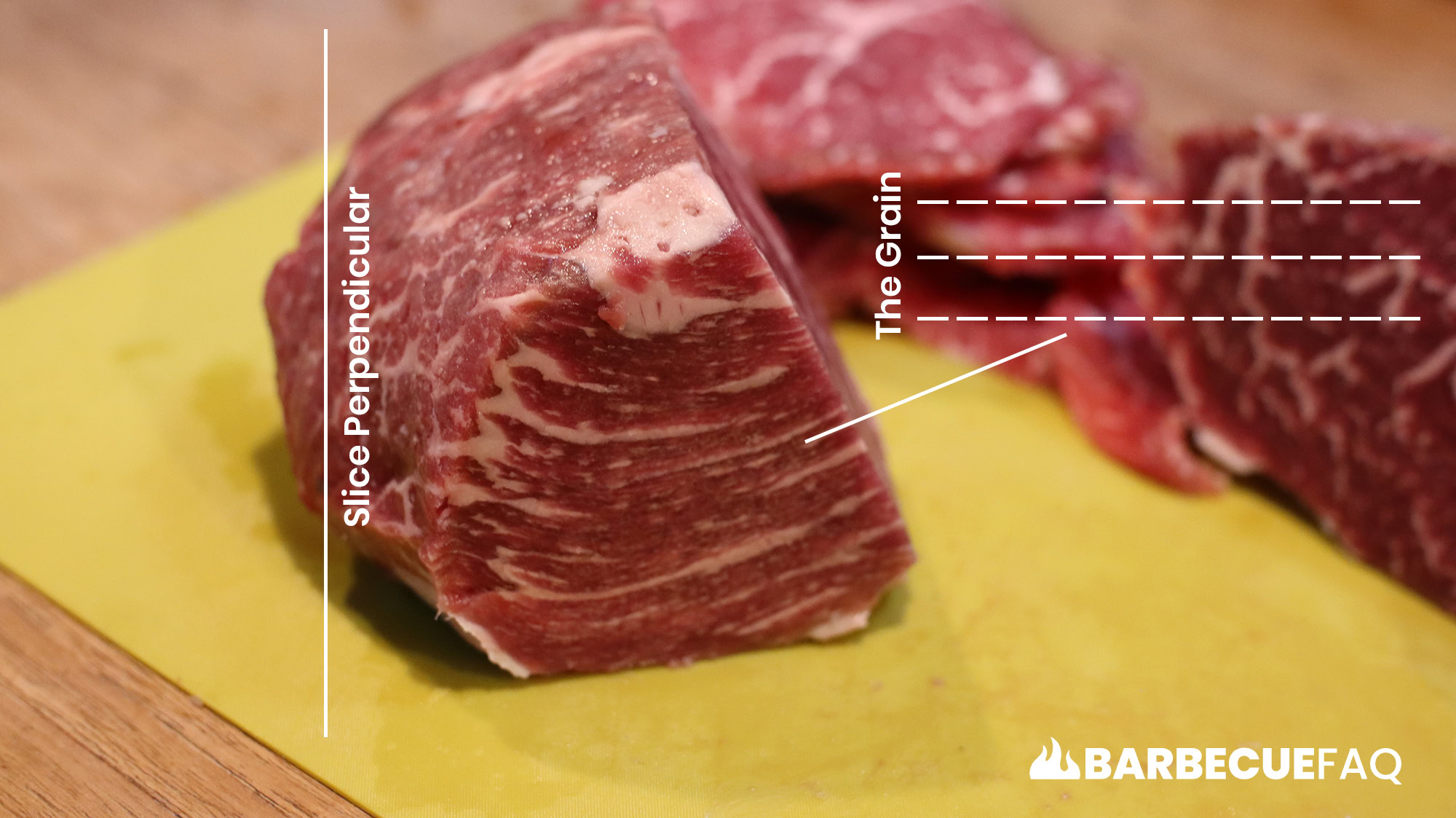
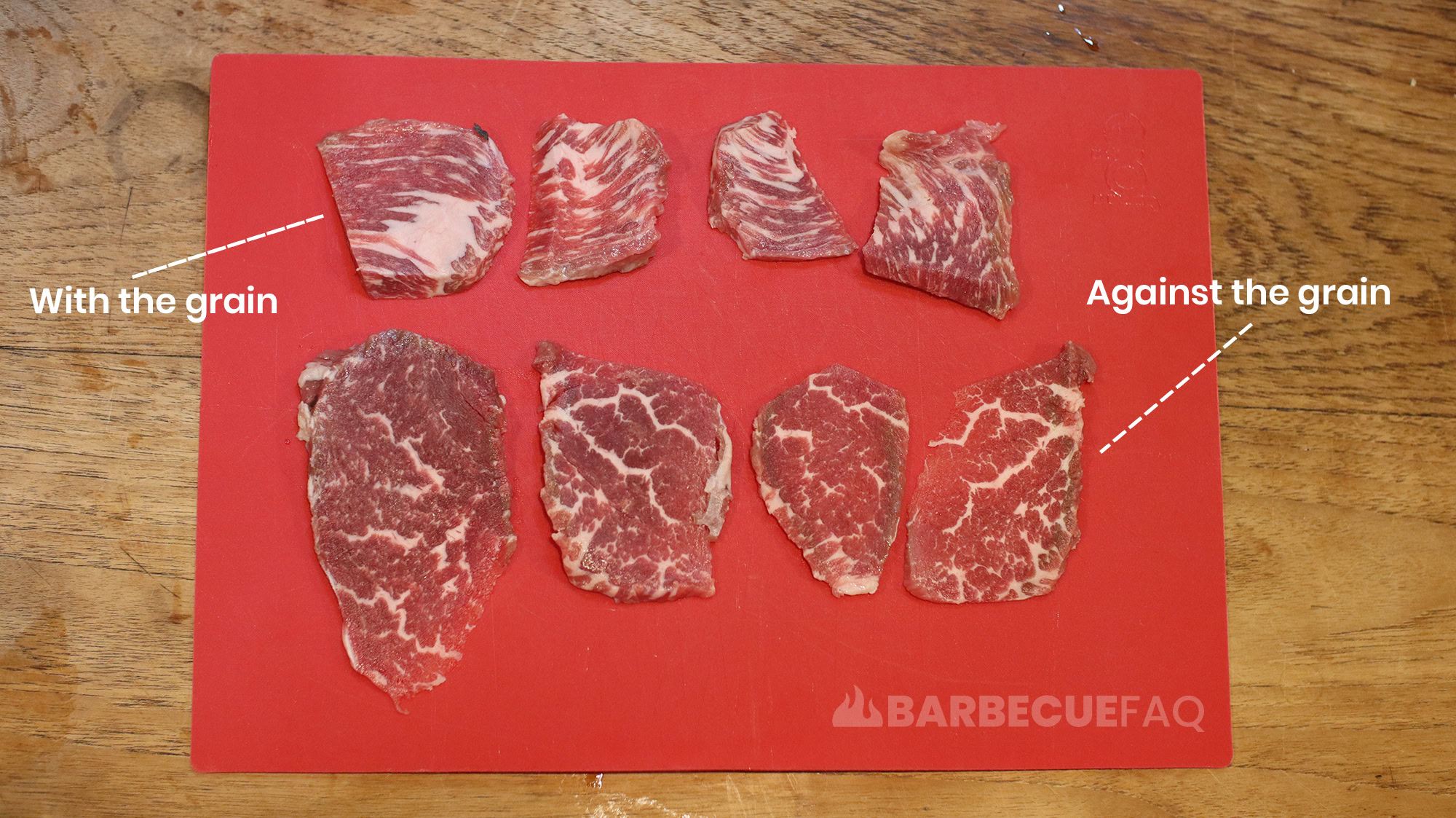
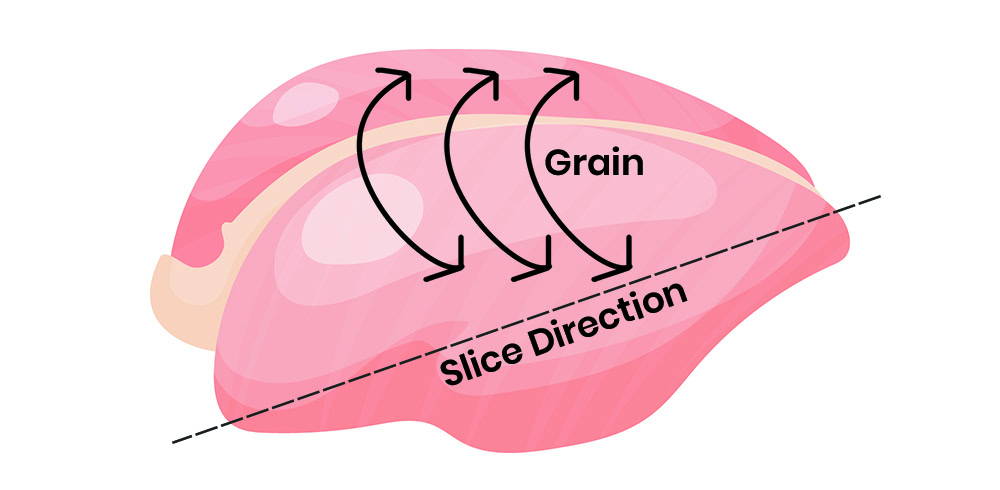
Meat is cut against the grain in order to improve the eating feel. In working beefiness primals like the flank (pictured beneath) the muscle fibers are conspicuously divers. By cutting the meat confronting - more specifically - perpendicular (90 degrees) to the grain y'all finer shorten the muscle fiber lengths and make information technology easier for your teeth to separate the meat. In lodge to better empathise what the grain is, it's important to accept an understanding of musculus anatomy and composition. Muscle tissues are comprised of bundles of cells chosen musculus fibers or fascicles. Muscle fibers are grouped into muscle bundles composed of myofibrils. The myofibrils are comprised of proteins actin, myosin, and others - referred to every bit myofibrillar proteins (myofilaments). This is the general muscle construction for beef, poultry, pork, and lamb. Essentially, muscle fibers are long strands and the direction in which they course is the grain. This is in a similar vein to the wood or lumber manufacture, "Grain" describes the growth blueprint of the tree. On working muscles, the grain direction is more pronounced equally the muscle cobweb bundles are thicker. Pictured below is a piece of flank steak. The grain structure or muscle fibers are very pronounced which makes it easy to determine the management to piece. Here's another case of a rump roast. Again, the grain structure is conspicuously divers. As you tin imagine, this is sort of problematic on smaller, weak muscles similar a loin or tenderloin where the muscle fibers are very fine. Granted, the musculus fibers are notwithstanding present, only they're harder to identify. In these cases, regardless of the direction you slice, the bite volition be soft and tender regardless. If you lot're the person who is preparing the meat, grain is more credible on raw meat than information technology is on cooked meat. The overarching goal is to shorten the musculus fibers as much as possible in order to make chewing easier. The next time you have a piece of meat like a flank steak or rump roast, slice a piece of meat both with and confronting the grain. Effort to rip the muscle fibers with the grain - Information technology's almost impossible. Attempt to rip or tear the muscle fibers against the grain - much easier. America's Test kitchen did a quantitative analysis of this which helps to further illustrate the amount of force needed to "chew" both with and against the grain. Their test also proves my signal in regards to weaker muscles grain management not mattering as much. They used a CT3 texture analyser in gild to simulate how much force is required to cut (seize with teeth) 5 mm into the meat. Force Needed to Bite On a working musculus like the flank, you demand 4.5x as much strength. Where-as on the strip loin you need ane.79x equally much force. Technically through trigonometry and knowing that you need to cut perpendicular to the grain (90 degrees) you could minimize the length of the meat fibers (making the length of the meat fibers the aforementioned equally the width of the slice). However, this is hardly practical and not many kitchens brand use of a protractor to cut their meat. On a working muscle, the result will exist a tougher/chewier piece of meat. For instance, with steak, if you were to attempt to chew with the grain, yous'd demand to employ significantly more than force which results in a markedly chewier piece of meat. Pictured above is a rump roast sliced both with and confronting the grain. Over again, you lot tin sort of see what I mean by if you were to tear the meat with either your hands or teeth; The chew is made easier when the muscle fibers are shorter - against the grain. Note: The pieces that were cut with the grain were fed to my dogs equally the in a higher place meat was existence used for jerky. No. This is one of the most common mistakes in regards to meat grain. Sear and/or grill marks have cypher to do with the grain of the meat. Sear marks are the result of the maillard reaction of amino acids and are contained of meat'south grain structure. A good portion of the world consumes chicken - people too seem to overwhelmingly love white meat over dark meat. In a similar vein to beef, piece on a bias perpendicular to the grain. Chicken breast's typical grain structure looks similar the following: Over again, you do not need to be super anal in terms of verbal cutting angle. Doing so with chicken breast is near incommunicable as the grain/striations tend to curve. However, slicing confronting the grain on a bias is still better than slicing parallel to the grain for much the same reason equally beef. The overarching reason it'southward recommended to slice confronting the grain is to make the meat more than tender and to promote a better eating feel. Meat that is sliced parallel to the grain will result in a chewy mouthfeel and require more effort to suspension-downwards. Muscle fibers that are cut confronting the grain are much easier for the teeth to divide. What is Meat "Grain"?

How to Identify the Grain Direction

Why is Meat Cutting Against the Grain?
Flank Steak Strip Loin with the grain 1729g 590g against the grain 383g 329g What Happens if Yous Slice Parallel to the Grain?
Are Grill Marks the Same as the Grain?

Does Poultry have a Grain Structure?
Final Thoughts
dalrympleyoungold.blogspot.com
Source: https://barbecuefaq.com/cutting-meat-against-the-grain/
0 Response to "what does it mean to cut meat against the grain"
Post a Comment